
Why a Mobile Device Management System Alone Is Not Enough for Commercial Device Programs
As mobile devices continue to circulate through trade-ins, returns, resale, and reuse programs, businesses are under increasing pressure to manage these devices securely and efficiently. Many organizations begin their journey by exploring a mobile device management system, assuming it will address all device-related challenges. While such systems play a role in certain environments, they are often misunderstood and frequently misapplied in commercial device operations.
For businesses that handle devices beyond internal employee use—such as retailers, mobile network operators, and recommerce providers—a mobile device management system alone does not deliver the coverage or flexibility required. Understanding its limitations is critical to building scalable, compliant device programs.
What a Mobile Device Management System Is Designed to Do
A mobile device management system traditionally focuses on IT-level administration of devices. These systems are primarily used by large enterprises to control devices issued to employees or users for a defined purpose.
Typical capabilities include:
- Enforcing security policies
- Configuring device settings
- Restricting applications or features
- Monitoring device compliance
- Remotely locking or wiping devices
These functions are valuable in controlled, internal environments where devices remain assigned to known users.
Where a Mobile Device Management System Falls Short
In commercial device ecosystems—where devices move between owners, locations, and business processes—the limitations of a mobile device management system become clear.
Such systems are not designed to:
- Handle device intake from external customers
- Perform standardized functional diagnostics
- Support resale, trade-in, or refurbishment workflows
- Track devices through multiple ownership stages
- Generate lifecycle-level compliance documentation
This makes them unsuitable as a standalone solution for businesses running device trade-in, return, or resale programs.
The Shift from Device Control to Device Lifecycle Management
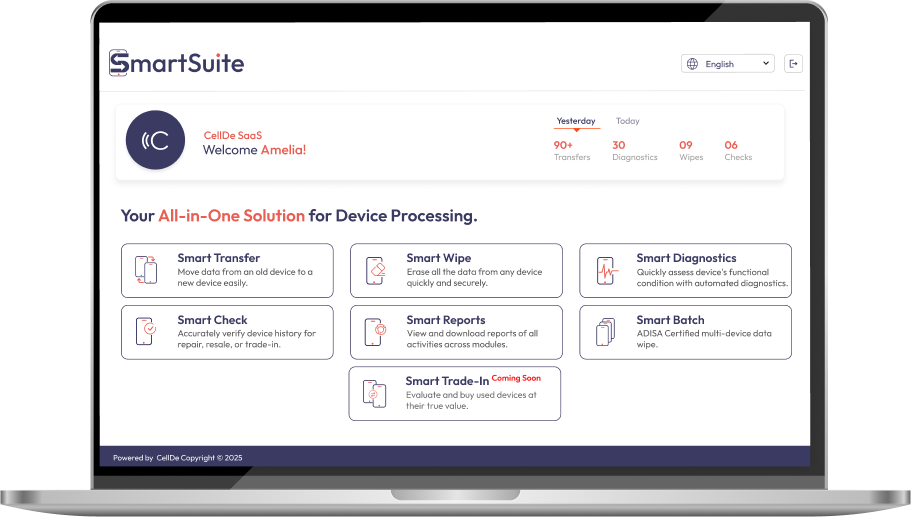
Commercial device programs require more than control—they require visibility across the entire device lifecycle. This is where Device Lifecycle Management becomes essential.
Rather than focusing on how a device is configured or restricted, Device Lifecycle Management software addresses:
- Device condition assessment
- Functional diagnostics
- Secure handling and erasure of data
- Trade-in and resale readiness
- Reporting and compliance documentation
This approach ensures that devices are managed responsibly from the moment they enter a program until their final disposition.
Supporting Business Customers, Not Individual Users
It is important to clarify that Device Lifecycle Management software operates exclusively in a B2B environment. The software does not interact with individual consumers or handle physical devices. Instead, it enables businesses to run device programs efficiently.
When a business adopts lifecycle-focused software, its own customers benefit indirectly, through:
- Faster device processing times
- Transparent evaluation outcomes
- Confidence in secure data handling
- Smoother trade-in and return experiences
This improves trust and satisfaction without requiring direct consumer-facing software interactions.
See also: How a Career Coach in Winnipeg Can Transform Your Professional Path?
Diagnostics: A Missing Layer in Traditional Systems
A mobile device management system does not typically include advanced diagnostic capabilities. In contrast, diagnostics are a cornerstone of Device Lifecycle Management.
Software-based diagnostics allow businesses to:
- Assess hardware functionality objectively
- Identify defects or performance issues
- Standardize grading and valuation processes
- Reduce disputes and manual inspections
Automated diagnostics ensure consistent results across large device volumes, something traditional management systems are not designed to support.
Secure Data Handling Beyond Basic Wipe Functions
While many mobile device management systems offer remote wipe features, these functions are intended for internal security incidents—not commercial reuse.
Device Lifecycle Management software focuses on secure, verifiable data erasure suitable for resale and reuse scenarios. This includes:
- Compliance with recognized data erasure standards
- Proof that data was permanently removed
- Audit-ready records for each device
For businesses processing high volumes of devices, bulk data wiping capabilities allow multiple devices to be securely erased at once. Importantly, only data wiping is supported in bulk—other processes are handled individually to maintain precision and accountability.
Why Commercial Programs Need Lifecycle Visibility
Devices in commercial programs do not remain static. They move through multiple stages, locations, and ownership changes. A mobile device management system does not track these transitions effectively.
Lifecycle-focused software provides:
- End-to-end visibility of device status
- Centralized records for each lifecycle stage
- Clear documentation of outcomes and actions
- Insight into operational performance
This level of visibility is essential for businesses managing trade-ins, returns, or recommerce at scale.
Compliance and Risk Reduction
Data protection regulations place significant responsibility on businesses handling customer devices. Failure to demonstrate secure data handling can result in financial penalties and reputational damage.
Device Lifecycle Management software supports compliance by:
- Logging lifecycle actions automatically
- Providing proof of secure data erasure
- Generating detailed reports for audits
- Reducing reliance on manual documentation
This structured approach significantly lowers compliance risk compared to fragmented or IT-focused systems.
Scaling Beyond Internal Use Cases
A mobile device management system is well-suited for static, internal environments. However, commercial device programs demand scalability across diverse workflows.
Lifecycle management software allows businesses to:
- Process higher device volumes efficiently
- Maintain consistent standards across locations
- Adapt quickly to changing program requirements
- Support long-term growth without added risk
This scalability ensures that device programs can expand without sacrificing security or accuracy.
Conclusion
While a mobile device management system serves a clear purpose in enterprise IT environments, it does not meet the complex needs of commercial device programs. Businesses managing devices across trade-in, resale, and reuse workflows require a broader, lifecycle-driven approach.
Device Lifecycle Management software fills this gap by addressing diagnostics, secure data handling, compliance reporting, and full lifecycle visibility. By moving beyond basic device control, businesses can protect customer data, improve operational efficiency, and build scalable, future-ready device programs.


