The Smart Way to Plan a Home Remodel
The smart way to plan a home remodel starts with three fundamentals: define your goals before touching anything, set a realistic budget with contingency built in, and assemble the right team before work begins. Most renovation headaches come from skipping these steps or rushing through them. A detailed plan keeps your project on time, within budget, and aligned with your vision. This guide walks through each phase of home remodel plans so you can approach your renovation with confidence rather than stress.
Define Your Goals and Priorities
Before contacting contractors or browsing materials, clarify why you’re remodeling. Are you updating an outdated kitchen for better functionality? Adding space for a growing family? Preparing to sell? Your goals shape every decision that follows.
Make a list of everything you want from the renovation. Then separate needs from wants. Structural repairs, safety upgrades, and functional improvements are needed. Luxury finishes and aesthetic upgrades are wanted. When budget constraints appear (and they will), this distinction helps you make smart tradeoffs.
Prioritize by impact. Focus first on changes that affect daily life or address urgent problems. Cosmetic updates can wait if necessary. This approach ensures your remodel delivers meaningful improvement even if you cannot complete every item on your list.
Set a Realistic Budget
A clear budget prevents the most common remodeling disaster: running out of money mid-project. Start by researching typical costs in your area for the type of work you’re planning. Get rough estimates from contractors before finalizing your budget, not after.
Your home remodel plans should account for every expense category:
Hard costs: Materials, labor, permits, inspections Soft costs: Design fees, temporary housing, eating out during kitchen renovations Contingency: 10 to 20 percent of total budget for unexpected issues
The contingency fund is non-negotiable. Hidden problems like faulty wiring, water damage, or structural issues often appear once walls open up. Projects involving kitchens, bathrooms, or any plumbing and electrical work should budget closer to 20 percent contingency.
Track spending throughout the project using a simple spreadsheet. Knowing your numbers in real time prevents surprises and helps you make informed decisions when changes arise.
Create a Detailed Timeline
How to plan a home remodel effectively means understanding the sequence. Work happens in a specific order, and each phase depends on completing the previous one.
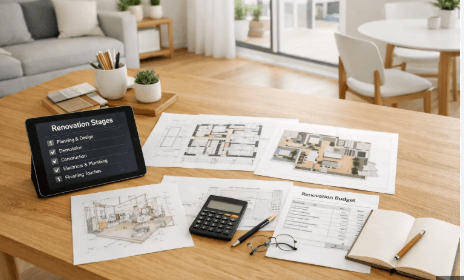
General renovation sequence:
- Planning and permits (1 to 3 months before construction)
- Demolition
- Structural work and framing
- Electrical, plumbing, HVAC rough-in
- Insulation and drywall
- Flooring, cabinets, fixtures
- Painting and finishing touches
- Final inspections and cleanup
Work backward from your desired completion date. Build buffer time into each phase. Delays happen due to permit processing, material backorders, contractor scheduling conflicts, and weather. A realistic timeline accounts for these realities rather than assuming everything will go perfectly.
Coordinate with your contractor to confirm the timeline is achievable. They know how long each phase typically takes and can flag potential bottlenecks before they become problems.
Hire the Right Team
The people you hire determine whether your renovation succeeds or fails. Rushing this step to save time often costs more in the long run.
For contractors: Get recommendations from people who have completed similar projects. Check online reviews and verify licensing and insurance. Interview at least three candidates. Ask about their experience with your type of renovation, how they handle unexpected issues, and their communication style.
Red flags to avoid: Unusually low bids, requests for large upfront payments, vague estimates without detailed line items, reluctance to provide references.
For designers or architects: If your project involves layout changes, structural modifications, or complex decisions, professional design help pays for itself. A good designer helps you avoid costly mistakes, select materials that work together, and create plans that contractors can execute efficiently.
Get everything in writing. Your contract should specify scope of work, timeline, payment schedule, how changes are handled, and warranty terms. Read it carefully before signing.
See also: Tips for Buying Homes in Zibata, Monterrey
Choose Materials Strategically
Material selection affects budget, timeline, and final results. Make these decisions early in the planning process, not during construction when delays become expensive.
Balance quality and budget: Invest in materials you will see and touch daily. Cabinets, countertops, flooring, and fixtures deserve quality. Items hidden inside walls can be more budget-conscious as long as they meet code and perform reliably.
Consider durability: High-traffic areas need materials that withstand wear. Bathrooms and kitchens need moisture-resistant options. If you’re updating a bathroom, following a thorough bathroom remodel checklist ensures you select appropriate materials for wet environments.
Lead times matter: Custom cabinets, specialty tiles, and imported materials can take weeks or months to arrive. Order early to avoid construction delays. Have backup options identified in case your first choice becomes unavailable.
For flooring that handles heavy use while looking great, materials like natural stone tiles offer durability and timeless appeal. Mineral Tiles (one of America’s top-selling tile brands) makes it easy to shop tiles online with a wide selection of finishes for kitchens, bathrooms, and living areas.
Prepare for Living Through Construction
Plan home remodel logistics beyond just the work itself. Construction disrupts daily life, and preparing in advance reduces stress.
If staying in your home: Seal off work areas with plastic sheeting to contain dust. Create alternative paths to essential spaces. Set up a temporary kitchen if yours will be unusable. Establish quiet hours with your contractor if you work from home.
If relocating temporarily: Factor housing costs into your budget. Plan for pets and children. Keep essential documents and valuables accessible.
General preparation: Clear the work area completely. Store furniture and belongings safely. Communicate with neighbors about noise, parking, and dumpsters. Establish a primary contact point with your contractor for daily updates.
Monitor Progress and Stay Flexible
Once construction begins, stay involved without micromanaging. Regular site visits and communication catch problems early when they’re still easy to fix.
Review progress against your timeline weekly. Ask questions when something looks different from what you expected. Document everything with photos in case disputes arise later.
Flexibility matters. Even with perfect planning, changes happen. Material availability shifts. Hidden problems appear. Design adjustments become necessary. The goal is not to avoid all changes but to handle them efficiently when they occur. A solid plan gives you the foundation to adapt without losing control of the project.
Conclusion
The smart way to plan a home remodel comes down to preparation. Define your goals clearly. Set a realistic budget with contingency. Create a detailed timeline. Hire qualified professionals. Choose materials strategically. Prepare for the disruption of construction.
Rushing any of these steps creates problems that cost more time and money than planning would have required. Invest the effort upfront, and your renovation becomes an exciting improvement rather than a stressful ordeal. The result is a home that works better for how you actually live.
FAQs
How long does it take to plan a home remodel?
Most home remodel plans require one to three months of planning before construction begins. This includes defining scope, setting budget, hiring contractors, finalizing designs, obtaining permits, and ordering materials. Larger or more complex projects need more planning time.
What percentage of my home value should I spend on a remodel?
A common guideline is 5 to 15 percent of your home’s current value for a major remodel. Spending significantly more risks over-improving relative to your neighborhood, which may not return full value if you sell. Spending too little may not achieve meaningful improvement.
Should I get permits for my remodel?
Most structural changes, electrical work, plumbing modifications, and HVAC alterations require permits. Skipping permits creates legal and safety risks, and unpermitted work can cause problems when selling your home. Check with your local building department before starting work.
How do I avoid going over budget on a remodel?
Set a realistic budget with 10 to 20 percent contingency before starting. Get detailed estimates from contractors. Make material selections early to avoid rushed decisions. Track spending throughout the project. Resist scope creep by sticking to your original plan unless changes are truly necessary.
Can I live in my home during a remodel?
It depends on the scope. Minor updates to one room are usually manageable. Major renovations involving kitchens, bathrooms, or multiple rooms often require temporary relocation. Discuss logistics with your contractor and factor any temporary housing costs into your budget.