How to Hit Every Catering Delivery Window Without the Morning Chaos
Catering delivery is a different beast. You are not dropping off a single bag at a doorstep. You are hauling full-service setups to conference rooms, wedding venues, and corporate offices — all with rigid time windows. One late arrival does not just mean a cold meal. It means a client who never calls you again.
If you are still planning catering routes with spreadsheets and gut instinct, the margin for error is shrinking every day.
Why Generic Route Tools Fail for Catering
Most delivery route planners treat every stop the same. They sequence addresses by proximity or shortest drive time and call it done. For a courier, that works. For catering, it breaks immediately.
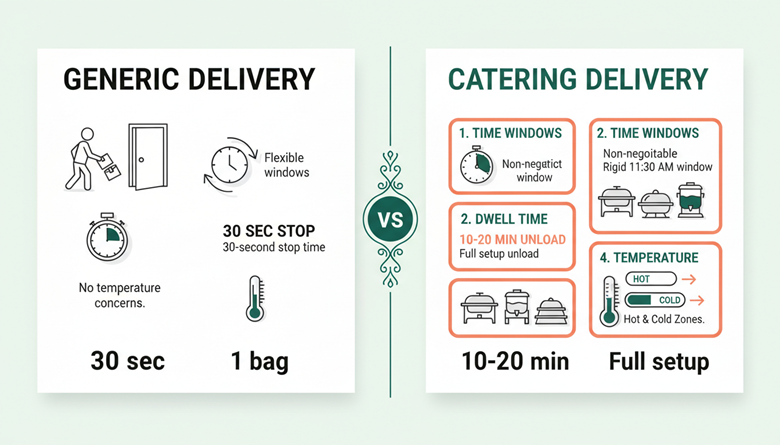
Time windows are non-negotiable. A lunch meeting starting at noon needs food at 11:30, not 11:55. You are working backward from event start times, not just chasing shortest distance. A geographically close stop that does not need delivery for two hours is a trap if you drive there first.
Dwell time is real. Unloading a full catering setup takes 10 to 20 minutes, not the 30 seconds a courier spends at a front door. If your route plan ignores dwell time, you fall behind by the second stop and never recover.
Orders are bulky and fragile. Chafing dishes, tiered trays, beverage dispensers. Loading and unloading takes longer than standard delivery. The route needs to account for that overhead at every stop.
Temperature matters. Hot food needs to arrive hot. Cold platters need to stay cold. Longer routes mean more quality risk. Sequence matters for food safety, not just efficiency.
See also: How Home Remodeling Enhances Energy Efficiency and Indoor Comfort
What a Catering-Ready Route Planner Actually Does
The right tool handles constraints that spreadsheets cannot. Here is the checklist.
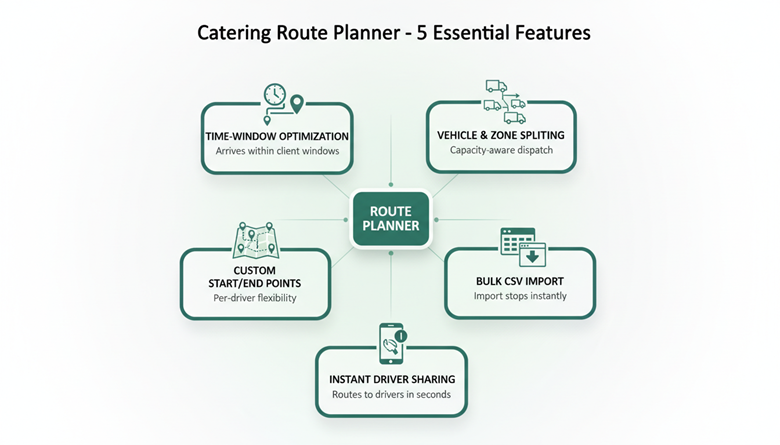
Optimizes around time windows, not just distance. The tool should reorder stops so drivers arrive within each client’s required window. A route planner that respects delivery windows eliminates the guesswork that causes late arrivals.
Splits stops across vehicles by capacity and zone. If you have three drivers and 15 stops, the tool should distribute them based on location clusters, delivery windows, and load size — not just divide them evenly.
Sets custom start and end points per driver. Your drivers leave from different locations. Some return to the kitchen, others head to a second shift. The tool needs to reflect reality, not assume every route is a round trip from the same place.
Imports stops in bulk. CSV upload with addresses, time windows, and notes. If you deliver to the same offices every Tuesday, you should import your regular stops and adjust quantities or times as needed. No re-entering addresses manually.
Shares routes to drivers instantly. Once routes are built, drivers need them on their phones immediately. Push to a driver app, share a link, or download as CSV.
Operational Habits That Prevent the Cascade
Even with the right tool, a few habits separate teams that deliver on time from teams that scramble.
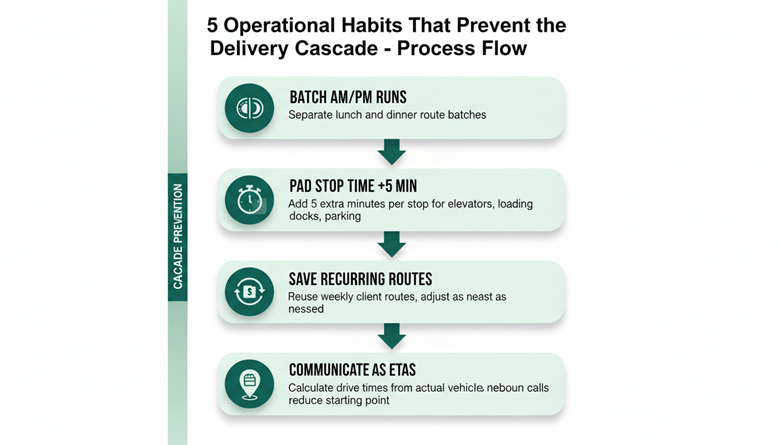
Batch morning and afternoon runs separately. Most catering clusters around lunch and dinner. Plan two distinct route batches rather than stretching one continuous run across the whole day.
Pad stop time for complex setups. Elevator access, loading docks, parking lot walks — add five extra minutes per stop. One underestimated stop creates a cascade that delays everything after it.
Use a [route planner](https://www.shipday.com/free-route-planner) for recurring clients. If the same offices order every week, save those stops and adjust as needed. Rebuilding the same routes from scratch weekly is wasted effort.
Set the kitchen as your start point. This ensures drive times calculate from where your vehicles actually begin. Obvious, but frequently overlooked when planning in a rush.
Communicate ETAs proactively. Automated dispatch notifications reduce inbound calls from clients asking where the food is. Every call your team does not take is time saved for the next delivery.
The Reputation Equation
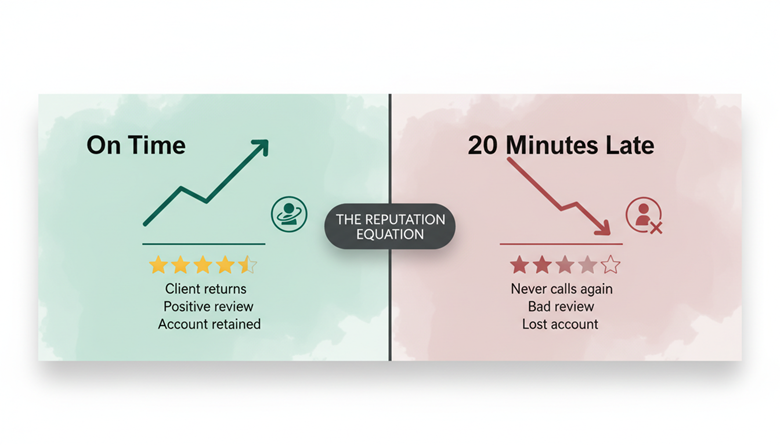
Catering clients do not give second chances on timing. A corporate lunch that arrives 20 minutes late in front of 30 people is a lost account and a bad review. The companies that consistently deliver on time are not working harder. They are planning routes around time windows, load times, and vehicle capacity instead of winging it every morning.
The food is your product. The delivery is your reputation. Treat your routing like it matters as much as your menu.